
Published on: 3rd June 2026
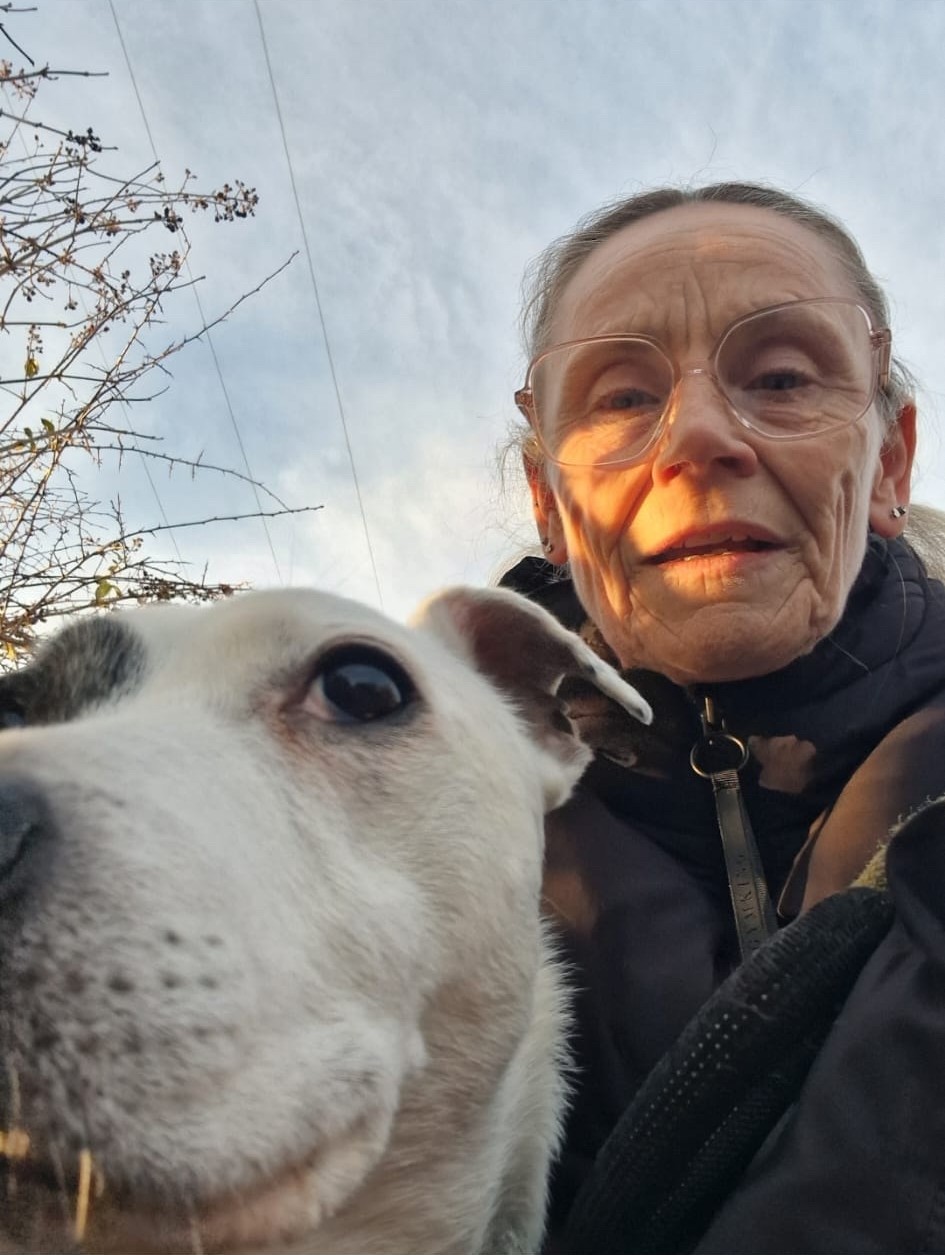 A Bury woman has shared how NHS mental health support helped her rebuild her life after a traumatic dog attack left her with post-traumatic stress disorder (PTSD) and an intense fear of dogs.
Kay Byrne, 55, was left too afraid to go outside alone after being attacked by three stray dogs while out running on holiday in Turkey last year.
With support from NHS Bury Talking Therapies, Kay was able to overcome her fear and begin living independently again.
As an avid runner, Kay had gone out early one morning for a run while on holiday in Antalya. Just ten minutes in, she was attacked by three stray dogs and badly bitten on her legs.
Kay explained: “I’d seen stray dogs abroad and thought I knew how to manage it, as it had never been a problem before. I clapped loudly, stopped and waited before setting off again. I turned a corner and suddenly they were attacking me.”
“There was no one around to help. I was bleeding, crawling on the ground, trying to get back to the hotel while the dogs followed me. It felt like it went on forever.”
Kay was taken to hospital, where she received urgent treatment for severe leg injuries and began a course of rabies vaccinations.
The reality of what had happened slowly began to take hold when she returned home to the UK.
Kay said: “I completely underestimated the impact it would have on my life. I couldn’t walk properly or leave the house on my own for weeks. I went from running every day to barely being able to step outside.”
She then developed severe anxiety and symptoms of post-traumatic stress disorder, including nightmares, flashbacks, and a constant fear that she was still at risk.
“I couldn’t get over the idea that I could have rabies and not know about it – as there’s no symptoms until it’s too late. I kept thinking I was going to die.”
Kay returned to hospital for frequent check-ups and blood tests and was given additional rabies jabs, but her fears continued to grow.
The relationships she had with dogs was also affected, including her best friends’ Staffordshire Bull Terrier-cross, Coco, who she often cared for.
“I stopped socialising or going to places where there would be dogs, like family barbeques and birthday parties. At work, some clients would bring their pets with them, and I had to leave the room. I was terrified.”
“At my worst, if I saw a dog on a walk, even while driving, I’d have to turn the car around. I felt like a child again, relying on other people just to feel safe. I’d lost a huge part of who I was.”
A turning point came when Kay read a story about a woman who had died from rabies following a scratch from a stray cat. It triggered her worst fears, and she had a panic attack at work.
“I was inconsolable. Everything hit me and I was begging doctors to check me again. They assured me I was safe, but I couldn’t accept it or move on.”
 After encouragement from a work counsellor, Kay decided to self‑refer to NHS Bury Talking Therapies. She then met with therapist Noreen Malik (pictured left).
Kay said: “The best thing I ever did was fill in that self‑referral form. From the first session, Noreen reassured me that what I was feeling was real and valid. For the first time, I felt safe talking about it.”
Kay attended weekly sessions, gradually working through her trauma at her own pace. With support and reassurance, she began to face her fears step by step, from watching programmes about dogs, to visiting her best friend’s house to see Coco.
A major turning point came when Kay undertook ‘reliving’ therapy, focusing on memories from the event in a safe, controlled environment.
Noreen Malik, cognitive behavioural therapist explained: “Reliving therapy gently supports someone to talk through a traumatic experience in a safe and controlled way. Although it can feel difficult, it helps the brain understand that the danger has passed, so the memories become less distressing and feel firmly in the past.”
Kay added: “It was frightening and emotional, but it changed everything. It felt like a light had been switched on. My anxiety started to come down, and I stopped feeling like I was constantly in danger.”
As her confidence grew, Kay began to reclaim parts of her old life. Before Christmas, she set a challenge to return to running.
On New Year’s Eve, she completed her first run since the attack - even wearing the same running clothes she had worn in Turkey.
Kay said: “I was so proud of myself. A few days later, I even took Coco for a walk. It was lovely to spend time with him again and feel that connection with an animal that I’d missed out on. I proved to myself that I could do it - and it was amazing.”
Noreen added: “After the attack, Kay was left with deep emotional trauma that lasted long after her physical injuries healed. With support through cognitive behavioural therapy, reliving and exposure therapy, Kay slowly faced her fears and rebuilt her confidence.”
“Over time, she was able to run on her own again and even felt confident enough to plan another holiday to Turkey. I’m delighted to see the improvement in her, and to know what a positive difference the service has made to her life.”
Kay is now back to running regularly and has hopes to complete a half-marathon in the coming year. She also feels able to be around dogs again.
She explained: “I’m still cautious, and think I always will be, but it doesn’t rule my life anymore.”
“Without NHS Talking Therapies and Noreen’s support, I honestly don’t think I’d be where I am today. They gave me my life back.”
Kay hopes that by sharing her experience, others will feel encouraged to seek help if they are struggling after trauma:
“I want people to know that it isn’t your fault that something traumatic has happened to you, and that people do care. You can self‑refer to talking therapies, but not everyone knows that. The only reason I found out was through my work counsellor. Keep spreading the word so more people can get support they need.”
NHS Talking Therapies offer support and treatment for a range of issues including low mood, stress, worry or anxiety, difficulty sleeping, feelings of low self-worth, panic attacks, phobias, and more.
People aged 16 years and above, registered with a GP in Bury, can refer themselves by completing an online form. They can also be referred by their GP or another health professional.